AI Safety for Children & Parents
👨👩👧 A Practical Guide to Helping Children Use Artificial Intelligence Safely and Responsibly
AI Safety for Children & Parents
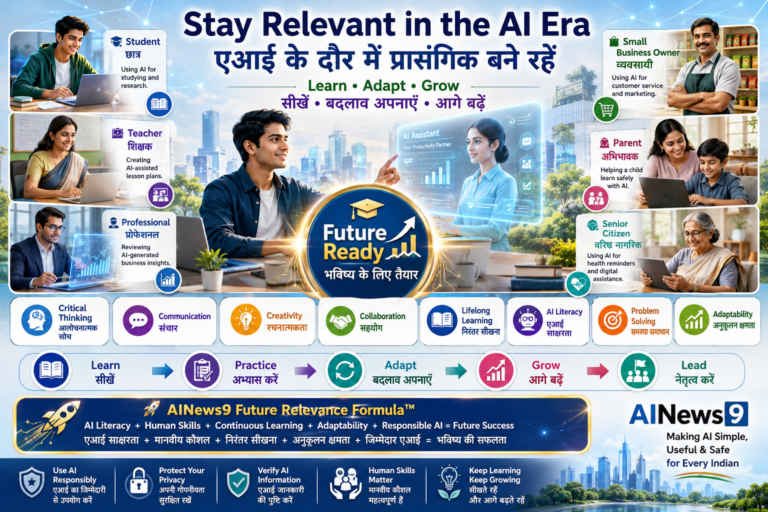
Artificial Intelligence is quickly becoming part of children’s everyday lives—from homework and learning to creativity and entertainment. Like the internet, AI offers incredible opportunities when used responsibly. The key is helping children understand both its benefits and its limitations. At AINews9, we believe that safe AI starts with informed families. In this guide, you’ll learn how parents and teachers can help children use AI confidently, responsibly, and safely in today’s digital world.
👥 Who Should Read This
This guide is especially useful for:
- 👨👩👧 Parents and Guardians
- 👩🏫 Teachers and Educators
- 🎓 Students (10 years and above)
- 🏫 School Leaders
- 📚 Anyone guiding children in their AI journey
No technical knowledge is required.
📖 What You’ll Learn
By the end of this guide, you’ll be able to:
- Understand why children are using AI.
- Recognize both the benefits and potential risks.
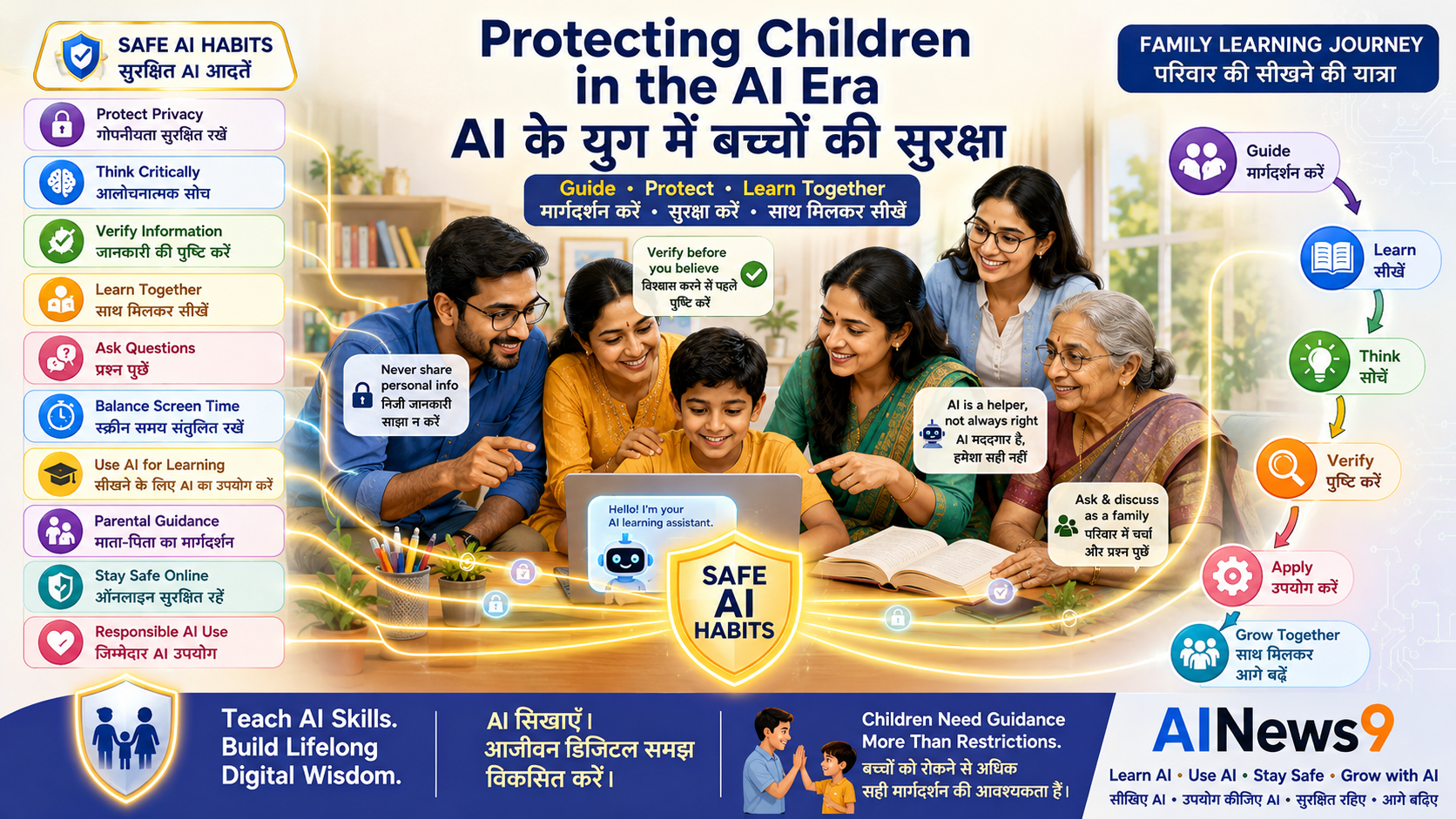
- Teach children safe AI habits.
- Protect children’s privacy online.
- Encourage responsible and ethical AI use.
- Create simple family AI safety rules.
📚 In This Guide
👦 Why Are Children Using AI More Than Ever?
Artificial Intelligence is becoming a natural part of education and everyday life.
Children now use AI to:
- Explain difficult subjects
- Complete homework
- Practice languages
- Learn coding
- Generate ideas
- Create stories
- Make presentations
- Explore creative projects
Many educational apps, search engines, and learning platforms already include AI features.
For today’s children, AI is becoming as common as calculators, search engines, and educational videos.
Learning how to use it safely is now an essential life skill.
🌟 Benefits of AI for Children
When used responsibly, AI can become an excellent learning companion.
Some of the biggest benefits include:
📚 Better Learning Support
AI can explain complex topics using simple language and provide step-by-step explanations that help children understand concepts at their own pace for AI Safety for Children & Parents
🎨 Encouraging Creativity
Children can use AI to:
- Write stories
- Create poems
- Brainstorm ideas
- Design presentations
- Generate artwork
- Practice creative writing
AI can inspire imagination rather than replace it.
🌍 Personalized Learning
Every child learns differently.
AI tools can adapt explanations, provide additional examples, and suggest practice exercises based on a learner’s needs.
This makes learning more flexible and engaging.
🌐 Language Learning
AI can help children:
- Practice English
- Learn new vocabulary
- Improve pronunciation
- Translate simple sentences
- Build communication skills
♿ Accessibility
AI also helps children with different learning needs through:
- Text-to-speech
- Speech-to-text
- Reading assistance
- Simplified explanations
- Language translation
These tools make education more inclusive.
🛡️ AINews9 Safety Tip #1
Teach children that AI is a learning assistant—not a replacement for thinking, asking questions, or solving problems on their own.
⚠️ Potential Risks Children Should Understand
Like every digital technology, AI also comes with responsibilities.
Children should understand that AI can sometimes:
- Provide incorrect information.
- Create fake images or videos.
- Generate biased or inappropriate responses.
- Encourage overdependence if used without supervision.
- Collect personal information if used carelessly.
These risks do not mean children should avoid AI.
Instead, they highlight why guidance from parents and teachers is so important.
⚠️ Safety Alert
Children should never share personal information such as their full name, home address, school details, passwords, OTPs, or family financial information with public AI tools.
✅ Safe Practice
Encourage children to ask a trusted adult whenever an AI response feels confusing, unusual, or inappropriate. Open conversations build confidence and help children develop safe digital habits.
🏡 How Parents Can Help Children Use AI Safely
Parents don’t need to be AI experts to guide their children.
The most important role of a parent is to encourage curiosity while teaching safe and responsible digital habits.
Here are some practical ways to help children use AI confidently.
💬 Learn Together
Instead of treating AI as something unfamiliar, explore it together.
Ask your child:
- What AI tool are you using?
- What are you learning?
- Can you show me how it works?
- What do you like about it?
These conversations help build trust and encourage children to seek guidance whenever they are unsure.
📚 Teach Children to Verify Information
AI can sometimes make mistakes.
Encourage children to:
- Check information in school textbooks.
- Compare answers with trusted educational websites.
- Ask teachers when something seems confusing.
- Think critically instead of accepting every AI response.
One of the most valuable lessons children can learn is:
AI can help you learn—but you should still think for yourself.
⏰ Encourage Healthy AI Habits
AI should support learning—not replace it.
Help children maintain a healthy balance by encouraging them to:
- Read books.
- Solve problems independently.
- Spend time outdoors.
- Play sports.
- Participate in creative activities.
- Interact with family and friends.
Technology should enhance childhood—not replace real-world experiences.
🛡️ AINews9 Safety Tip #2
Use AI together before children use it independently. Shared learning builds confidence, trust, and responsible digital habits.
👩🏫 Advice for Teachers
Teachers play an important role in helping students develop AI literacy.
Instead of discouraging AI completely, schools can teach students how to use it responsibly.
Teachers can encourage students to:
- Use AI to understand concepts.
- Ask follow-up questions.
- Verify AI-generated information.
- Cite reliable sources.
- Develop critical thinking skills.
Students should understand that AI is a learning assistant—not a shortcut for avoiding learning.
🎓 Good AI Habits for Students
Students can make AI a valuable study partner by following a few simple habits.
✅ Use AI to Learn
Ask AI to explain difficult concepts instead of simply providing answers.
✅ Review AI Responses
Check whether answers are accurate before submitting assignments or projects.
✅ Write in Your Own Words
Use AI for ideas and understanding, but complete schoolwork using your own thinking and creativity.
✅ Ask Questions
The best learners stay curious.
If an AI response is confusing, ask follow-up questions or discuss it with a teacher or parent.
⚠️ Safety Alert
Using AI to copy homework without understanding the topic may help you finish today’s assignment, but it won’t help you succeed in tomorrow’s exam.
🔒 Protecting Children’s Privacy
Children often don’t realize that personal information should not be shared online.
Teach children never to enter the following into public AI tools:
- Full name
- Home address
- School name
- Phone number
- Passwords
- OTPs
- Family banking information
- Personal photographs without permission
Parents should also review the privacy settings of AI applications before children begin using them.
📱 Family AI Safety Rules
Every family should create simple AI rules that everyone understands.
Here is an example checklist.
✅ Family AI Safety Checklist
- Ask before trying a new AI app.
- Never share passwords or OTPs.
- Don’t share personal information.
- Verify AI answers with trusted sources.
- Tell a parent if something online feels strange.
- Use AI to learn—not to cheat.
- Balance screen time with offline activities.
- Be kind and respectful when using AI.
Simple family rules help children build safe digital habits that last a lifetime.
🛡️ AINews9 Safety Tip #3
Children don’t just learn from rules—they learn from examples. When parents and teachers use AI responsibly, children are more likely to do the same.
✅ Safe Practice
Set aside one “AI Learning Time” each week where parents and children explore an AI tool together, discuss what they learned, and talk about how to use it safely. This builds digital confidence while strengthening family communication.
⚖️ Balancing AI with Critical Thinking
Artificial Intelligence can answer questions in seconds, but children still need to develop the ability to think, analyze, and solve problems independently.
The goal is not to stop children from using AI.
The goal is to ensure that AI supports learning instead of replacing thinking.
Encourage children to:
- Ask “Why?” and “How?” questions.
- Compare AI answers with books and trusted websites.
- Discuss ideas with parents and teachers.
- Solve some problems without AI.
- Learn from mistakes.
Critical thinking is a life skill that no technology can replace.
🚫 Common Parenting Mistakes
Many parents are still learning about AI, which means it’s easy to make mistakes.
Being aware of these common challenges can help families create healthier AI habits.
| ❌ Common Mistake | ✅ Better Approach |
|---|---|
| Completely banning AI | Teach responsible AI use. |
| Trusting every AI answer | Encourage children to verify information. |
| Using AI as a babysitter | Stay involved in your child’s digital activities. |
| Ignoring privacy settings | Review apps before children use them. |
| Focusing only on risks | Discuss both the benefits and responsibilities of AI. |
| Not talking about AI at home | Keep regular conversations about safe AI use. |
Remember:
Children learn best when technology is guided by conversation, not fear.
🌟 Best Practices for Families
Healthy AI habits begin at home.
Here are some simple practices every family can adopt.
✅ Explore AI Together
Spend time using AI tools with your children.
Learning together helps parents understand how AI works while giving children confidence to ask questions.
✅ Encourage Curiosity
Praise children for asking thoughtful questions rather than simply accepting AI-generated answers.
Curiosity leads to deeper learning.
✅ Set Healthy Boundaries
Agree on:
- Appropriate screen time.
- Approved AI applications.
- Homework expectations.
- Family privacy rules.
Clear expectations help children use technology responsibly.
✅ Celebrate Human Skills
Remind children that qualities such as kindness, creativity, teamwork, empathy, communication, and critical thinking remain valuable in an AI-powered world.
AI can assist these skills—but it cannot replace them.
🛡️ AINews9 Safety Tip #4
The best digital safety tool isn’t an app—it’s an open conversation between parents, teachers, and children.
📝 Key Takeaways
Congratulations!
You now understand how families can help children use Artificial Intelligence safely and responsibly.
Remember these key lessons:
- ✅ AI can be a valuable learning companion.
- ✅ Parents and teachers play an essential role in guiding children.
- ✅ Children should never share personal information with public AI tools.
- ✅ AI responses should always be verified.
- ✅ Critical thinking is more important than ever.
- ✅ Healthy digital habits begin at home.
- ✅ Open conversations build trust and confidence.
- ✅ Responsible AI use prepares children for the future.
❓ Frequently Asked Questions
1. Is Artificial Intelligence safe for children?
Yes.
When used with age-appropriate guidance and supervision, AI can support learning, creativity, and problem-solving.
Parents and teachers should help children understand both its benefits and limitations.
2. At what age should children start using AI?
There is no single age that applies to every child.
Parents should consider the child’s maturity, the AI platform being used, and whether appropriate supervision is available.
Always follow the age recommendations provided by the AI service.
3. Should children use AI for homework?
Yes—but AI should be used to understand concepts, explore ideas, and improve learning.
Children should avoid copying AI-generated answers without understanding them.
4. Can AI replace teachers?
No.
AI can assist learning by explaining concepts and providing practice, but teachers provide guidance, feedback, encouragement, and human interaction that AI cannot replace.
5. What personal information should children never share?
Children should never share:
- Full name
- Home address
- School details
- Phone number
- Passwords
- OTPs
- Banking information
- Personal family information
6. How can parents introduce AI safely?
Start by exploring AI together.
Choose trusted platforms, set family rules, discuss online safety, and encourage children to ask questions whenever they are unsure.
7. Should schools teach AI?
Yes.
Teaching AI literacy alongside digital safety and critical thinking prepares students to use AI responsibly throughout their education and future careers.
8. What is the most important AI lesson for children?
The most important lesson is simple:
AI can help you learn—but your own thinking, creativity, and judgment will always matter most.
📚 Trusted Resources
To learn more about AI safety for children, explore these trusted resources:
- UNICEF – Guidance on Children and Artificial Intelligence
- UNESCO – Generative AI in Education
- Common Sense Media – AI Resources for Families
- Google Safety Center
- Microsoft Responsible AI
- AINews9 Stay Safe Series
Always use trusted educational resources when introducing AI to children.
💬 Final Thoughts
Artificial Intelligence will become a natural part of the next generation’s education, careers, and everyday lives.
Our responsibility is not to keep children away from AI.
Our responsibility is to help them understand it, question it, and use it wisely.
When parents, teachers, and children learn together, AI becomes more than just a technology—it becomes a tool for creativity, curiosity, and lifelong learning.
Remember:
The goal isn’t to raise children who depend on AI. The goal is to raise children who know how to use AI responsibly while thinking for themselves.
That is one of the most valuable skills they can develop for the future.
🎓 Continue Your AI Journey
Continue learning with AINews9.
📘 Learn AI
- L001 – What is Artificial Intelligence?
- L002 – What is Generative AI?
- L003 – What is Machine Learning?
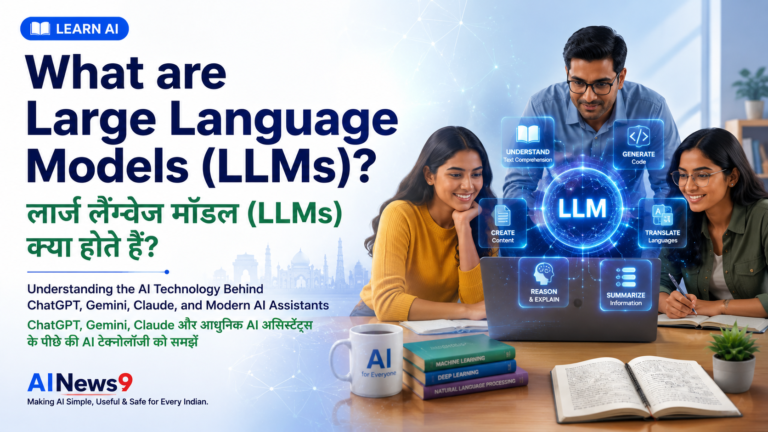
- L004 – What are Large Language Models (LLMs)?
- L005 – What is ChatGPT?
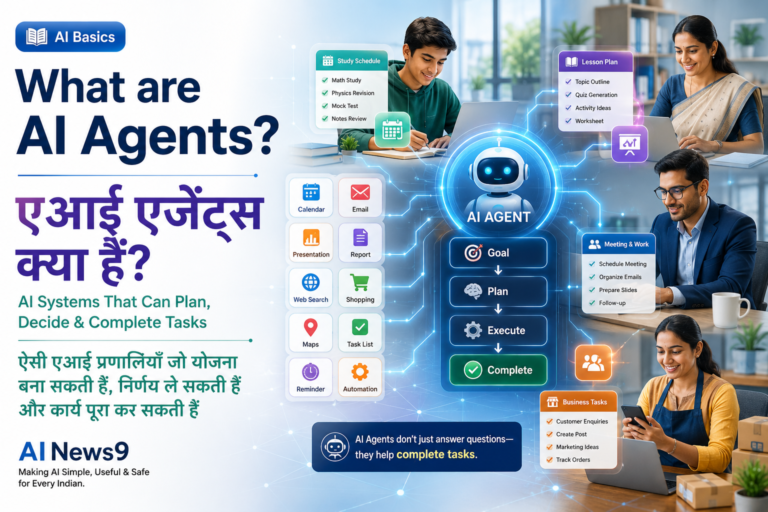
- L006 – What are AI Agents?
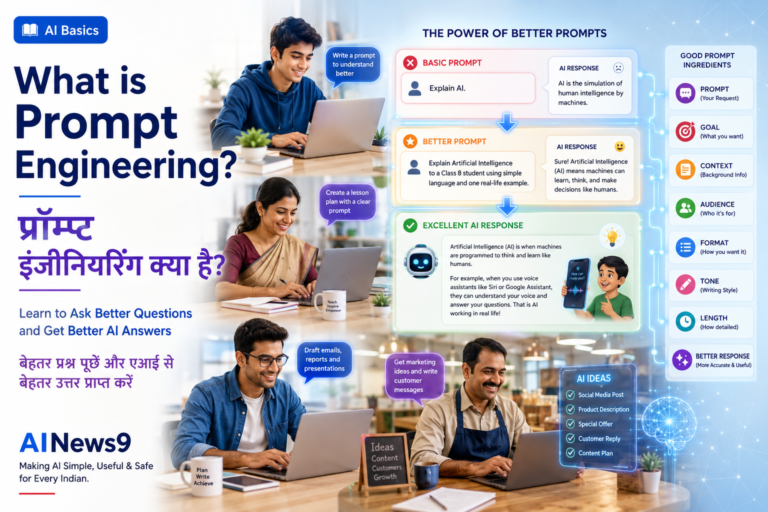
- L007 – What is Prompt Engineering?
- L008 – How Does AI Work?
- L009 – History of Artificial Intelligence
- L010 – AI Terminology Explained
🛠️ Use AI
- U001 – How Students Can Use AI Effectively
- U002 – How Teachers Can Use AI in Education
- U003 – How Professionals Can Use AI at Work
- U004 – How Small Businesses Can Use AI
- U005 – Beginner’s Guide to ChatGPT
- U006 – Beginner’s Guide to Gemini
- U007 – Beginner’s Guide to Claude
- U008 – Beginner’s Guide to NotebookLM
- U009 – AI for Everyday Productivity
- U010 – 10 Best AI Tools for Beginners
🛡️ Stay Safe
- S001 – AI Safety for Beginners
- S002 – What Are Deepfakes?
- S003 – AI Scams and How to Avoid Them
- S004 – AI Safety for Children & Parents ✅
- S005 – AI & Data Privacy
- S006 – Safe Prompting Practices
- S007 – Responsible AI Use
- S008 – AI Ethics Explained
- S009 – AI Misinformation
- S010 – AI Safety Checklist
🚀 Grow with AI
- G001 – AI Skills for Everyone
- G002 – AI Career Roadmap
- G003 – AI Career Opportunities
- G004 – AI Certifications
- G005 – Future AI Skills
- G006 – Future of Work in the AI Era
- G007 – AI Entrepreneurship
- G008 – AI for Business Growth
- G009 – Building an AI Mindset
- G010 – Your AI Learning Journey
Every lesson helps families build the knowledge, confidence, and digital skills needed to thrive in an AI-powered world.
🏛️ About AINews9
AINews9 is India’s AI Literacy Platform with a mission to make Artificial Intelligence Simple, Useful & Safe for Every Indian.
We empower:
- 🎓 Students
- 👩🏫 Teachers
- 👨👩👧 Parents
- 💼 Professionals
- 👴 Senior Citizens
- 🏪 Small Business Owners
Through our four learning pillars:
- 📘 Learn AI
- 🛠️ Use AI
- 🛡️ Stay Safe
- 🚀 Grow with AI
Together, let’s prepare the next generation to use Artificial Intelligence with confidence, responsibility, creativity, and wisdom.