What Are Deepfakes?
🎭 A Simple & Practical Guide to Understanding AI-Generated Fake Images, Videos, and Voices
What Are Deepfakes?
Artificial Intelligence can now create images, videos, and voices that look and sound remarkably real.
While this technology has many positive uses, it can also be used to create convincing fake content that is difficult to distinguish from reality.
These AI-generated creations are known as deepfakes.
As deepfakes become more common on social media, messaging apps, and even news platforms, learning how to recognize them has become an essential digital skill.
The good news is that you don’t need to be a technology expert to stay protected.
At AINews9, we believe that you don’t need to fear AI—you need to understand it.
In this guide, you’ll learn what deepfakes are, how they are created, why they can be dangerous, and the practical techniques you can use to identify suspicious content before trusting or sharing it.
👥 Who Should Read This
This guide is ideal for:
- 🎓 Students
- 👩🏫 Teachers
- 👨👩👧 Parents
- 💼 Professionals
- 👴 Senior Citizens
- 🏪 Small Business Owners
- 📱 Social Media Users
- 🌐 Anyone who wants to identify AI-generated fake content
No technical knowledge is required.
📖 What You’ll Learn
By the end of this guide, you’ll be able to:
- Understand what deepfakes are.
- Learn how AI creates fake images, videos, and voices.
- Recognize common signs of deepfake content.
- Understand the risks associated with deepfakes.
- Verify suspicious media before trusting or sharing it.
- Protect yourself from deepfake scams and misinformation.
📚 In This Guide
🎭 What Are Deepfakes?
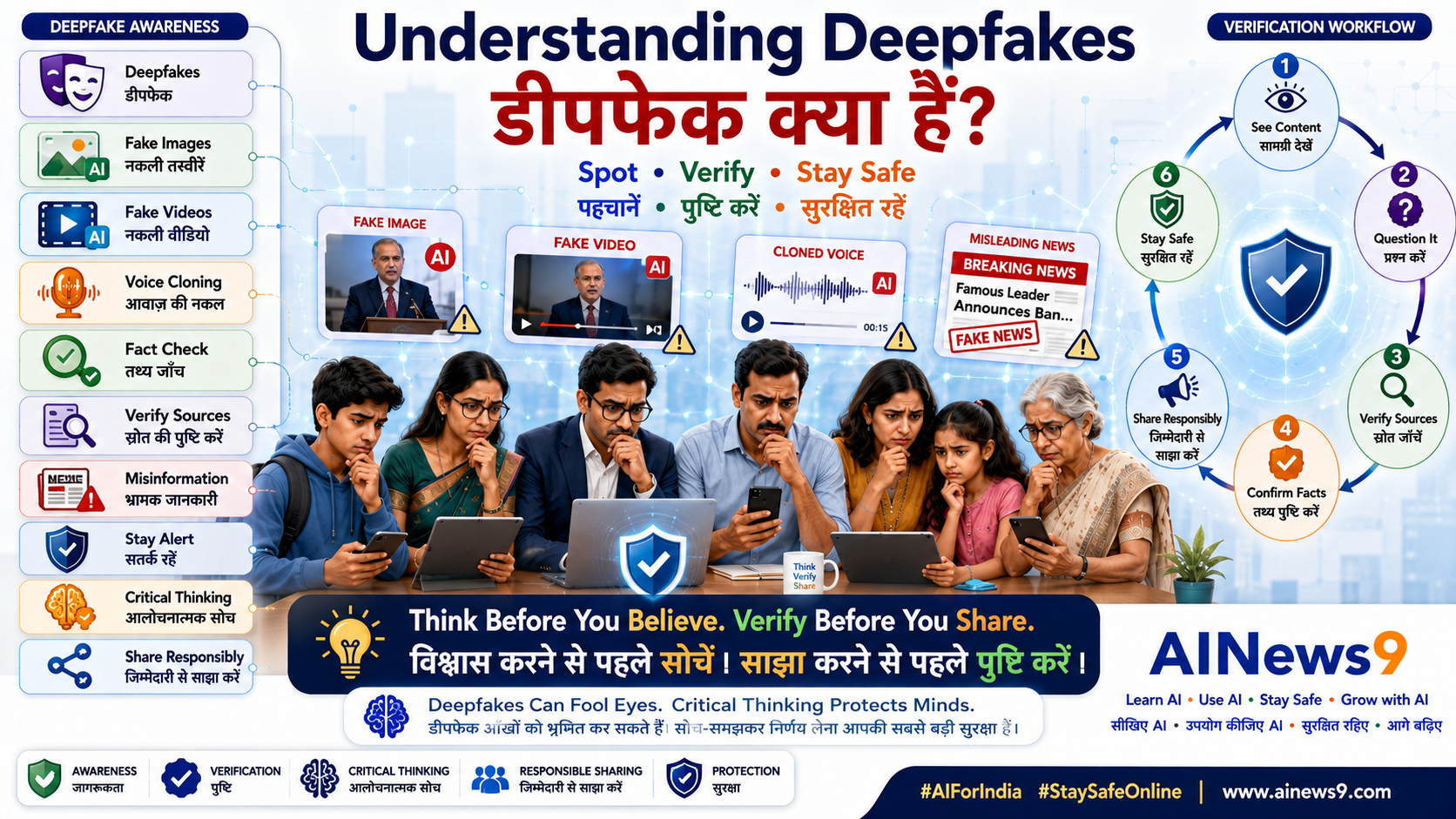
A deepfake is an image, video, or audio recording that has been created or altered using Artificial Intelligence to make it appear real.
The word deepfake combines two terms:
- Deep Learning – A branch of Artificial Intelligence that enables computers to recognize patterns and generate realistic content.
- Fake – Something that is not genuine or has been intentionally manipulated.
When these technologies are combined, AI can generate content that looks or sounds remarkably authentic—even though it was never recorded in real life.
For example, AI can create a video that appears to show someone saying words they never actually spoke or generate a voice recording that closely imitates another person’s voice.
This ability has improved rapidly in recent years, making deepfakes increasingly convincing.
🤖 How Does AI Create Deepfakes?
Modern AI systems learn by analyzing thousands—or even millions—of examples of images, videos, or voice recordings.
By identifying patterns in facial expressions, movements, speech, and other characteristics, AI learns how a person looks, sounds, and behaves.
It can then generate entirely new content that closely imitates those patterns.
Although the underlying technology is complex, the basic idea is simple:
The more examples AI learns from, the more realistic the generated content can become.
Today’s AI tools can create deepfakes in just a few minutes using publicly available photos, short video clips, or voice recordings.
💡 Did You Know?
A voice recording of just a few seconds may be enough for some AI systems to create a convincing imitation of a person’s voice.
This is one reason why protecting your digital footprint is becoming increasingly important.
📸 Different Types of Deepfakes
Deepfakes are no longer limited to videos.
Today, AI can generate several different types of synthetic media.
🖼️ AI-Generated Images
AI can create realistic photographs of people, places, and objects that never actually existed.
Some images are created for art, education, or advertising, while others may be used to spread misinformation or impersonate individuals.
🎥 AI-Generated Videos
AI can modify existing videos or create entirely new ones.
Examples include:
- Making someone appear to say words they never spoke.
- Changing facial expressions.
- Replacing one person’s face with another.
- Creating realistic video avatars.
These videos can look highly convincing, especially when viewed quickly on social media.
🎙️ AI Voice Cloning
Voice cloning uses Artificial Intelligence to imitate a person’s speech patterns, pronunciation, tone, and rhythm.
It can create realistic audio that sounds almost identical to the original speaker.
Voice cloning has many legitimate uses, including accessibility, language learning, audiobooks, and entertainment.
However, it can also be misused for fraud or impersonation.
👤 AI-Generated Avatars
AI can create digital presenters or virtual humans that look and speak like real people.
Businesses often use these avatars for:
- Training videos
- Customer support
- Educational content
- Product demonstrations
- Multilingual communication
When clearly identified, AI avatars can be extremely useful.
Problems arise when viewers are not informed that the content has been generated by AI.
🌍 Positive Uses of Deepfake Technology
Although the word deepfake often has a negative reputation, the underlying technology also has many beneficial applications.
Examples include:
- 🎬 Film production and visual effects
- 🎓 Educational simulations
- 🏥 Assistive communication for people with speech impairments
- 🌐 Language translation with synchronized lip movements
- 📚 Historical recreations for museums and education
- 🎮 Gaming and virtual reality
- 💼 Corporate training videos
Like many technologies, the impact depends on how people choose to use it.
🛡️ AINews9 Safety Tip #1
Don’t assume every realistic image, video, or voice recording is genuine. As AI improves, verifying the source becomes more important than judging content by appearance alone.
⚠️ Safety Alert
If a video, image, or voice recording seems shocking, unbelievable, or emotionally charged, pause before believing or sharing it. Verify the original source first.
✅ Safe Practice
Before forwarding viral content on WhatsApp, Instagram, Facebook, X, or other social media platforms, take a few moments to confirm whether it has been reported by trusted and reliable news organizations.
⚠️ Why Are Deepfakes Dangerous?
Deepfake technology itself is not inherently harmful.
Like many AI technologies, it can be used for both positive and negative purposes.
The real danger arises when deepfakes are created to deceive, manipulate, or exploit people.
As deepfakes become more realistic, it becomes increasingly difficult to distinguish between genuine and AI-generated content.
This can lead to misinformation, financial fraud, identity theft, and loss of public trust.
📱 How Deepfakes Are Used in Everyday Scams
Scammers are increasingly using AI-generated content to make fraud more convincing.
Here are some common examples.
🎙️ Voice Cloning Scams
Imagine receiving a phone call that sounds exactly like your son, daughter, or a close family member.
The caller urgently asks for money, claiming they are in trouble.
Because the voice sounds authentic, many people act before verifying the situation.
Today, AI can create convincing voice clones using only a short audio sample available online.
💼 Business Impersonation
Cybercriminals may create fake audio or videos that appear to come from a company executive.
Employees may be tricked into:
- Transferring money
- Sharing confidential information
- Approving fake transactions
- Revealing sensitive business data
This type of fraud is becoming a growing concern for organizations worldwide.
📰 Fake News
Deepfakes can make public figures appear to say or do things they never actually did.
These fake videos often spread rapidly on social media before the truth is verified.
This can:
- Mislead the public
- Influence opinions
- Damage reputations
- Create unnecessary panic
❤️ Online Relationship Scams
Scammers may use AI-generated photos or videos to create fake online identities.
They build trust over time before asking victims for money, gifts, or personal information.
These scams can be emotionally and financially devastating.
🛡️ AINews9 Safety Tip #2
If someone urgently asks for money or confidential information through a phone call, voice message, or video call, verify their identity using another trusted method before taking any action.
🔍 How to Spot a Deepfake
Although modern deepfakes are becoming increasingly realistic, many still leave small clues.
Looking carefully can help you identify suspicious content.
👀 Look at Facial Movements
Watch for:
- Unnatural blinking
- Stiff facial expressions
- Odd lip movements
- Poor synchronization between speech and mouth movement
Even advanced AI sometimes struggles with subtle human expressions.
💡 Check the Lighting
Real videos usually have consistent lighting.
In deepfakes, you may notice:
- Different lighting on the face
- Strange shadows
- Unnatural reflections
- Inconsistent skin tones
These small details can reveal manipulation.
🎧 Listen Carefully
AI-generated voices may sound realistic, but sometimes they include:
- Unnatural pauses
- Robotic tone changes
- Inconsistent emotions
- Unusual pronunciation
If something sounds slightly “off,” verify the source.
🌐 Verify the Source
Before believing or sharing content, ask:
- Who originally posted it?
- Is it from a verified account?
- Have trusted news organizations reported it?
- Is there independent confirmation?
Reliable sources remain one of the best defenses against misinformation.
⚠️ Safety Alert
If a video makes extraordinary claims or creates a strong emotional reaction, pause before sharing it. Emotional manipulation is a common tactic used in misinformation campaigns.
📰 Deepfakes and Social Media
Social media platforms allow information to spread within minutes.
Unfortunately, fake content often travels faster than verified information.
Many people share videos without checking:
- Who created them
- Whether they have been edited
- Whether they are AI-generated
- Whether trusted organizations have verified them
A single fake video can reach millions of people before corrections appear.
This is why responsible sharing is becoming an essential digital skill.
✅ Safe Practice
Before forwarding a video or image on WhatsApp, Facebook, Instagram, or X, spend a minute checking whether it has been confirmed by reliable news organizations or official sources.
👨👩👧 Deepfake Safety for Different Users
Different groups face different risks.
Here are some practical recommendations.
🎓 Students
- Verify viral videos before sharing.
- Don’t use deepfakes to bully classmates.
- Learn how AI-generated media works.
- Think critically before believing online content.
👩🏫 Teachers
- Teach students how to identify manipulated media.
- Discuss responsible AI use in classrooms.
- Encourage fact-checking habits.
- Promote digital literacy.
👨👩👧 Parents
- Talk to children about fake online content.
- Encourage open conversations.
- Help children verify information before sharing.
- Monitor younger children’s online activity.
💼 Professionals
- Verify unexpected requests from senior leaders.
- Confirm financial approvals through official channels.
- Be cautious of AI-generated business communications.
- Follow organizational security policies.
👴 Senior Citizens
- Be cautious of emotional phone calls requesting urgent money transfers.
- Verify unexpected video or voice messages with family members.
- Never share banking information without confirmation.
🏪 Small Business Owners
- Train employees to recognize impersonation attempts.
- Verify payment requests independently.
- Protect company communication channels.
- Educate staff about AI-enabled fraud.
🛡️ AINews9 Safety Tip #3
Trust people—not just technology. Whenever something seems unusual, confirm it directly with the person or organization before responding.
🌟 Best Practices for Protecting Yourself from Deepfakes
Deepfake technology is becoming more realistic every year.
Fortunately, you don’t need advanced technical skills to protect yourself.
By following a few simple habits, you can significantly reduce the chances of being misled by AI-generated content.
✅ Verify Before You Believe
Don’t trust a video, image, or voice recording simply because it looks or sounds authentic.
Before believing sensational content:
- Check the original source.
- Look for reports from trusted news organizations.
- Search whether the same information has been independently verified.
- Be cautious if the content appears only on social media.
Verification takes only a few minutes but can prevent the spread of misinformation.
✅ Slow Down Before Sharing
Deepfakes often rely on emotional reactions.
People are more likely to forward content that makes them feel shocked, angry, excited, or afraid.
Before clicking Forward or Share, ask yourself:
- Who created this content?
- Can I verify it?
- Could this be AI-generated?
- Am I helping spread misinformation?
A short pause can prevent a fake story from reaching hundreds of other people.
✅ Protect Your Digital Identity
The more personal photos, videos, and voice recordings you share publicly, the more material may be available for misuse.
While you don’t need to stop using social media, it’s wise to be mindful of what you make publicly accessible.
Consider these simple precautions:
- Review your privacy settings regularly.
- Share personal information thoughtfully.
- Be selective about public audio and video uploads.
- Avoid posting sensitive personal details online.
Good digital habits reduce unnecessary risks.
🛡️ AINews9 Safety Tip #4
The easiest way to stop a deepfake from spreading is simple: don’t share it until you’ve verified it. Every responsible user helps create a safer internet.
🚫 Common Mistakes People Make
Many people unknowingly help deepfakes spread online.
Avoid these common mistakes.
| ❌ Common Mistake | ✅ Better Practice |
|---|---|
| Believing every viral video | Verify the source first |
| Sharing content immediately | Pause and fact-check |
| Trusting familiar voices automatically | Confirm through another channel |
| Assuming AI-generated media is easy to detect | Stay cautious and observant |
| Ignoring official fact-checks | Follow trusted news and official sources |
| Reacting emotionally | Think critically before responding |
Remember:
Deepfakes succeed when people react quickly instead of thinking carefully.
🌍 Becoming a Responsible Digital Citizen
Every internet user plays a role in reducing misinformation.
You don’t need special software to fight deepfakes.
Simple actions make a big difference:
- Verify information.
- Report misleading content.
- Educate family members.
- Encourage critical thinking.
- Support trustworthy journalism.
- Share responsibly.
Responsible online behaviour protects both you and your community.
📝 Key Takeaways
Congratulations!
You now understand one of the fastest-growing challenges in the AI era.
Here are the most important lessons to remember:
- ✅ Deepfakes are AI-generated images, videos, or voices designed to appear real.
- ✅ Deepfake technology has both beneficial and harmful applications.
- ✅ Not every realistic video or voice recording is genuine.
- ✅ Verify suspicious content before believing or sharing it.
- ✅ Protect your personal information and digital identity.
- ✅ Be especially cautious of urgent requests involving money or confidential information.
- ✅ Critical thinking remains your strongest defense against misinformation.
❓ Frequently Asked Questions
1. What is a deepfake?
A deepfake is an AI-generated or AI-manipulated image, video, or audio recording designed to appear authentic even though it has been artificially created or altered.
2. Are all deepfakes harmful?
No.
Deepfake technology can be used for education, filmmaking, accessibility, entertainment, language translation, and corporate training.
The concern arises when it is used to deceive, manipulate, or commit fraud.
3. Can deepfakes be detected?
Sometimes.
Many deepfakes contain subtle visual or audio inconsistencies, but as AI technology improves, identifying them is becoming more difficult.
Verification through trusted sources is often more reliable than relying only on visual inspection.
4. Can AI clone someone’s voice?
Yes.
Modern AI systems can imitate a person’s voice using relatively short audio samples.
This is why voice-based scams are becoming more common.
5. How can I protect myself from deepfake scams?
- Verify unexpected requests.
- Don’t send money based on voice messages alone.
- Confirm identities using another communication channel.
- Stay informed about emerging AI scams.
6. Should I stop using social media?
No.
Instead of avoiding social media, use it responsibly.
Verify information before sharing it and be cautious of sensational content.
7. Are deepfakes illegal?
The technology itself is not illegal.
However, using deepfakes for fraud, harassment, identity theft, defamation, or other illegal activities may violate laws depending on the country and circumstances.
8. What is the best defense against deepfakes?
Critical thinking.
Always verify the source before trusting or sharing AI-generated content.
📚 Trusted Resources
To learn more about deepfakes and responsible AI, explore these trusted resources:
- Google Safety Center
- Microsoft Responsible AI
- OpenAI Safety Resources
- UNESCO – Guidance on Generative AI
- AINews9 Stay Safe Series
Learning continuously is the best way to stay ahead of evolving AI technologies.
💬 Final Thoughts
Deepfakes are one of the clearest examples of how Artificial Intelligence can be used for both innovation and deception.
The technology itself is neither good nor bad.
Its impact depends on how people choose to use it—and how prepared we are to recognize and respond to manipulated content.
Fortunately, staying safe doesn’t require advanced technical knowledge.
By verifying information, thinking critically, protecting your digital identity, and sharing responsibly, you can confidently navigate an online world where AI-generated media is becoming increasingly common.
Remember:
Seeing is no longer always believing. In the age of AI, verifying is more important than ever.
🎓 Continue Your AI Journey
Continue learning with AINews9.
📘 Learn AI
- L001 – What is Artificial Intelligence?
- L002 – What is Generative AI?
- L003 – What is Machine Learning?
- L004 – What are Large Language Models (LLMs)?
- L005 – What is ChatGPT?
- L006 – What are AI Agents?
- L007 – What is Prompt Engineering?
- L008 – How Does AI Work?
- L009 – History of Artificial Intelligence
- L010 – AI Terminology Explained
🛠️ Use AI
- U001 – How Students Can Use AI Effectively
- U002 – How Teachers Can Use AI in Education
- U003 – How Professionals Can Use AI at Work
- U004 – How Small Businesses Can Use AI
- U005 – Beginner’s Guide to ChatGPT
- U006 – Beginner’s Guide to Gemini
- U007 – Beginner’s Guide to Claude
- U008 – Beginner’s Guide to NotebookLM
- U009 – AI for Everyday Productivity
- U010 – 10 Best AI Tools for Beginners
🛡️ Stay Safe
- S001 – AI Safety for Beginners
- S002 – What Are Deepfakes? ✅
- S003 – AI Scams and Online Fraud
- S004 – AI Misinformation
- S005 – AI & Data Privacy
- S006 – Safe Prompting Practices
- S007 – AI for Children & Parents
- S008 – Responsible AI Use
- S009 – AI Ethics Explained
- S010 – AI Safety Checklist
🚀 Grow with AI
- G001 – AI Skills for Everyone
- G002 – AI Career Roadmap
- G003 – AI Career Opportunities
- G004 – AI Certifications
- G005 – Future AI Skills
- G006 – Future of Work in the AI Era
- G007 – AI Entrepreneurship
- G008 – AI for Business Growth
- G009 – Building an AI Mindset
- G010 – Your AI Learning Journey
Every lesson helps you become a more informed, responsible, and future-ready AI user.
🏛️ About AINews9
AINews9 is India’s AI Literacy Platform dedicated to making Artificial Intelligence Simple, Useful & Safe for Every Indian.
We empower:
- 🎓 Students
- 👩🏫 Teachers
- 👨👩👧 Parents
- 💼 Professionals
- 👴 Senior Citizens
- 🏪 Small Business Owners
Through our four learning pillars:
- 📘 Learn AI
- 🛠️ Use AI
- 🛡️ Stay Safe
- 🚀 Grow with AI
Together, we’re building an AI-literate India where every citizen can confidently recognize opportunities, avoid risks, and use Artificial Intelligence responsibly.