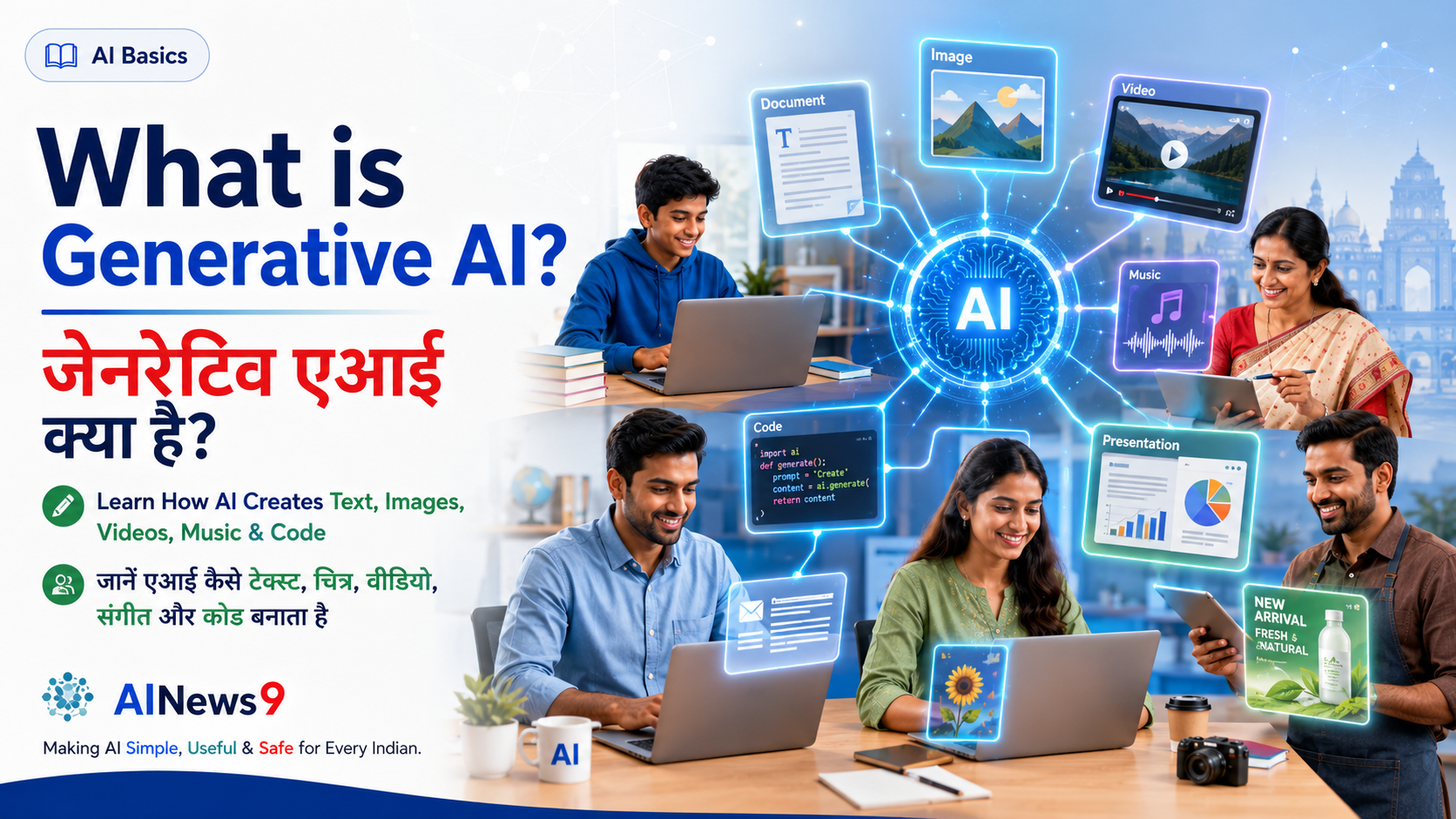
What is Generative AI? A Simple Beginner’s Guide
👥 Who Should Read This?
This lesson is designed for anyone who wants to understand Generative Artificial Intelligence (Generative AI) without technical jargon.
It is especially helpful for:
- 🎓 Students exploring modern AI tools
- 👩🏫 Teachers creating engaging learning experiences
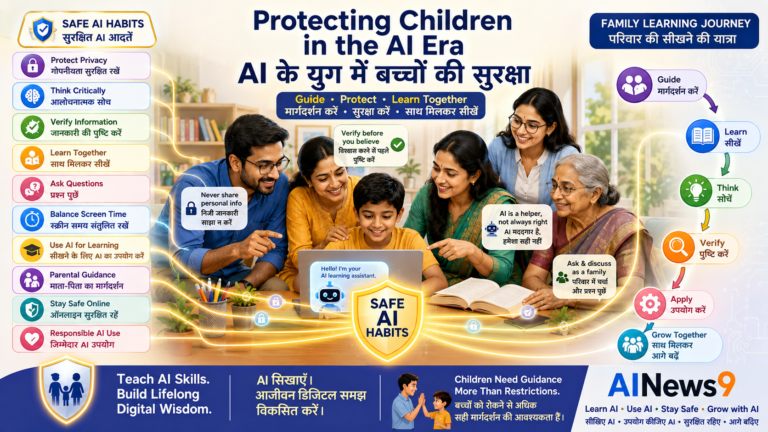
- 👨👩👧 Parents helping children use AI responsibly
- 💼 Professionals improving productivity at work
- 👴 Senior citizens curious about AI technologies
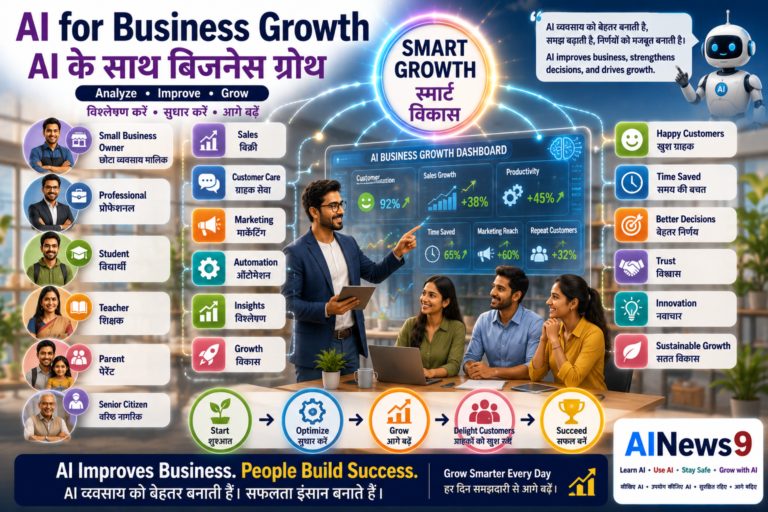
- 🏪 Small business owners looking to save time and grow their business
No programming knowledge is required.
📖 What You’ll Learn
By the end of this lesson, you’ll be able to:
- Understand what Generative AI is.
- Learn how Generative AI is different from traditional AI.
- Discover where Generative AI is used in everyday life.
- Explore popular Generative AI tools.
- Understand why Generative AI is changing education, work, and business.
- Learn how to use Generative AI responsibly.
📖 In This Lesson
Introduction
In the previous lesson, you learned that Artificial Intelligence (AI) enables computers to perform tasks that normally require human intelligence.
Now it’s time to explore one of the most exciting branches of AI—Generative AI.
Over the past few years, Generative AI has transformed how people learn, write, design, create presentations, develop software, generate images, and even compose music.
Tools such as ChatGPT, Microsoft Copilot, Google Gemini, Claude, and image generators have introduced millions of people to AI-powered creativity.
But what exactly is Generative AI?
Can it really create original content?
Does it think like humans?
Should students, teachers, professionals, and businesses learn to use it?
The answer is yes—but understanding how it works is the key to using it wisely.
This lesson explains Generative AI in simple language using practical examples that anyone can understand.
🤖 What is Generative AI?
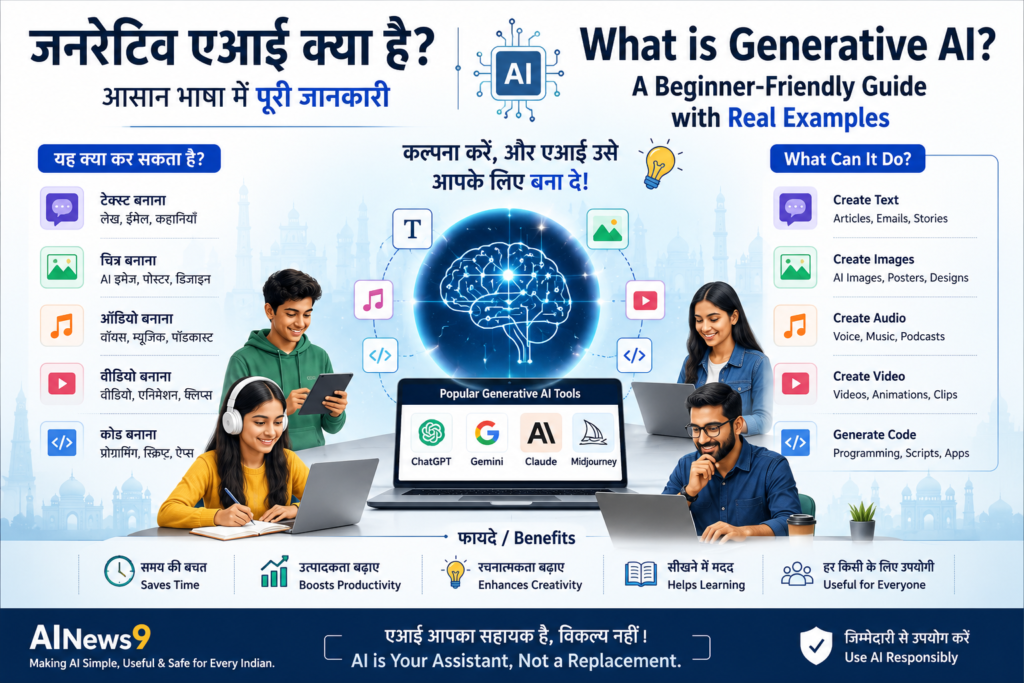
Generative AI is a type of Artificial Intelligence that can create new content based on what it has learned from large amounts of data.
Unlike traditional AI, which mainly analyzes information or makes predictions, Generative AI can produce completely new content such as:
- ✍️ Articles
- 📧 Emails
- 🖼️ Images
- 🎵 Music
- 🎬 Videos
- 💻 Computer code
- 📊 Presentations
- 📚 Study notes
- 💡 Ideas and suggestions
Think of Generative AI as a creative digital assistant that helps people produce content faster while allowing humans to review, refine, and make the final decisions.
🎨 A Simple Example
Imagine you ask two different AI systems the same question:
“Create a birthday invitation.”
A traditional AI system might simply search existing templates and recommend one.
A Generative AI system can create a completely new invitation with customized wording, colors, design ideas, and even matching images based on your instructions.
That is the biggest difference.
Traditional AI helps you find information.
Generative AI helps you create something new.
🔍 Generative AI vs Traditional AI
| Traditional AI | Generative AI |
|---|---|
| Analyzes data | Creates new content |
| Makes predictions | Generates ideas and content |
| Detects patterns | Produces text, images, music, videos, and code |
| Answers based on existing information | Creates new responses for every prompt |
| Supports decision-making | Supports creativity and productivity |
Both are Artificial Intelligence.
Generative AI is simply a specialized branch designed to generate new content.
🌍 Where Do We Already Use Generative AI?
Many people think Generative AI is something only software engineers use.
In reality, millions of people interact with it every day.
Examples include:
- ✍️ Writing emails
- 📚 Summarizing long documents
- 🎓 Preparing study notes
- 🎨 Creating digital artwork
- 📊 Building presentations
- 💻 Writing computer code
- 🌐 Translating languages
- 📱 Creating social media posts
- 📢 Generating marketing content
- 🛍️ Writing product descriptions
As Generative AI tools become easier to use, they are becoming part of everyday education, work, and business.
🌟 Why is Generative AI Becoming So Popular?
Generative AI is growing rapidly because it helps people save time while improving creativity and productivity.
Instead of starting with a blank page, users can begin with an AI-generated draft and then improve it using their own knowledge and creativity.
For example:
- Students can simplify difficult topics.
- Teachers can prepare lesson plans faster.
- Professionals can draft reports and presentations.
- Entrepreneurs can create marketing content.
- Small businesses can generate product descriptions and customer communications.
📌 Remember
Generative AI does not replace human creativity.
It amplifies it.
The best results come when humans and AI work together.
🔗 Connection to the Previous Lesson
In Lesson 1, you learned about Artificial Intelligence.
Generative AI is one branch of Artificial Intelligence that focuses on creating new content.
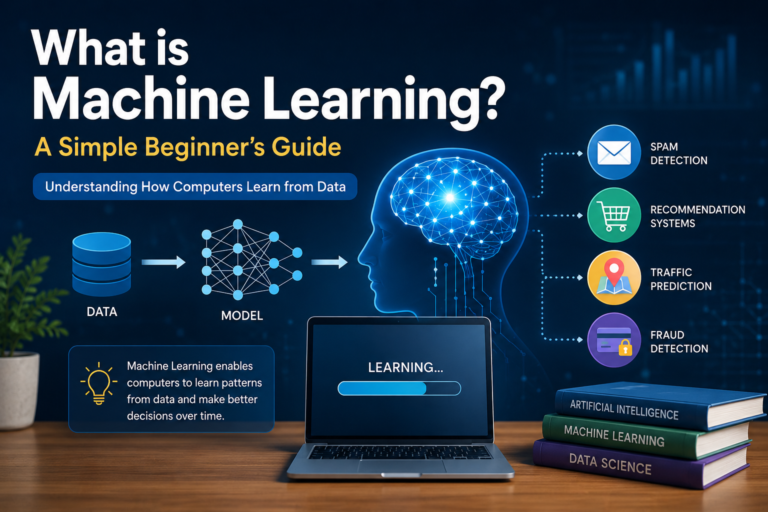
As you continue your learning journey, you’ll discover that Generative AI is powered by technologies such as Machine Learning and Large Language Models (LLMs)—topics that we’ll explore in the next lessons.
Understanding these building blocks will help you use AI tools more effectively and responsibly.
⚙️ How Does Generative AI Work?
Generative AI may seem magical, but its basic working principle is surprisingly easy to understand.
Like other AI systems, Generative AI learns from large amounts of data.
However, instead of only recognizing patterns or making predictions, it uses those patterns to generate entirely new content.
In simple terms, Generative AI generally follows three steps:
- Learn from Existing Data
- Understand Patterns and Relationships
- Generate New Content
Let’s explore each step.
📚 Step 1: Learning from Large Amounts of Data
Before Generative AI can create anything, it must first learn.
Developers train AI models using enormous collections of publicly available or licensed information, such as:
- Books
- Articles
- Websites
- Research papers
- Images
- Audio
- Videos
- Computer code
By studying this information, the AI learns how language, images, music, and other types of content are structured.
📌 Remember
Generative AI does not memorize everything word for word.
Instead, it learns patterns and relationships from the data it has been trained on.
🧠 Step 2: Recognizing Patterns
After studying large amounts of information, Generative AI begins identifying patterns.
For example, it learns:
- How sentences are formed.
- How stories are structured.
- How computer code is written.
- How images are composed.
- How conversations naturally flow.
These patterns help the AI understand what content should look like.
The better the training data, the better the AI becomes at generating useful responses.
✨ Step 3: Generating New Content
When you type a prompt, the AI doesn’t search the internet for an answer.
Instead, it uses everything it has learned to generate a brand-new response based on your instructions.
For example, you might ask:
- “Write a thank-you email.”
- “Create a travel itinerary for Jaipur.”
- “Explain photosynthesis to a Class 6 student.”
- “Design a logo for a coffee shop.”
- “Generate Python code to sort a list.”
Each response is created specifically for your request.
This is why two people asking similar questions may receive slightly different answers.
📌 Important
Generative AI creates responses based on probabilities and learned patterns.
It does not think, understand emotions, or possess human consciousness.
Human review is always important, especially for important decisions.
💬 Popular Generative AI Tools
Generative AI is available through many user-friendly applications.
Some of the most popular tools include:
| Tool | Common Uses |
|---|---|
| ChatGPT | Writing, learning, brainstorming, coding |
| Microsoft Copilot | Productivity, documents, presentations, coding |
| Google Gemini | Search, writing, learning, research |
| Claude | Writing, analysis, summarization |
| Canva AI | Graphic design and presentations |
| Adobe Firefly | AI-generated images and creative design |
| GitHub Copilot | Coding assistance for developers |
Each tool has different strengths, but they all help users create content more efficiently.
📌 Tip
Choose the tool that best fits your task rather than expecting one tool to do everything.
🌍 Everyday Examples of Generative AI
You don’t need to be a software engineer to benefit from Generative AI.
Here are some practical examples.
🎓 Students
Students can use Generative AI to:
- Understand difficult concepts
- Create study notes
- Summarize chapters
- Practice interview questions
- Improve writing skills
👩🏫 Teachers
Teachers can:
- Prepare lesson plans
- Create quizzes
- Generate classroom activities
- Explain topics at different learning levels
- Draft emails and notices
💼 Professionals
Professionals often use Generative AI to:
- Write reports
- Summarize meetings
- Prepare presentations
- Draft emails
- Brainstorm ideas
- Improve productivity
🏪 Small Businesses
Business owners can:
- Write product descriptions
- Create social media posts
- Draft marketing campaigns
- Respond to customer inquiries
- Generate promotional content
🎨 Creative Professionals
Designers, writers, musicians, and content creators use Generative AI to:
- Generate ideas
- Create illustrations
- Produce videos
- Draft scripts
- Compose music
- Speed up creative workflows
Generative AI is becoming a valuable assistant across many industries.
🇮🇳 Generative AI in India
India is rapidly embracing Generative AI across education, business, government, healthcare, and entrepreneurship.
Some common examples include:
📚 Education
Students and educators use AI to:
- Personalize learning
- Prepare educational content
- Improve language skills
- Support exam preparation
🏢 Businesses
Organizations use Generative AI to improve:
- Customer service
- Marketing
- Content creation
- Software development
- Knowledge management
🚀 Startups
Indian startups are increasingly building AI-powered products that solve problems in healthcare, agriculture, finance, education, and local languages.
🌐 Digital India
As India’s digital economy continues to grow, Generative AI is expected to play an important role in:
- Innovation
- Productivity
- Public services
- Digital inclusion
Learning how to use Generative AI responsibly will become a valuable skill for people across every profession.
🔗 Generative AI Is Part of a Bigger AI Ecosystem
Generative AI does not work alone.
It is powered by several underlying technologies.
In the next lessons, you’ll learn about:
- 🧠 Machine Learning
- 💬 Large Language Models (LLMs)
- 🤖 AI Agents
- ✍️ Prompt Engineering
Understanding these concepts will help you make better use of modern AI tools and appreciate how they work together.
✅ Benefits of Generative AI
Generative AI is transforming the way people learn, work, create, and solve problems.
When used responsibly, it helps individuals become more productive without replacing human creativity and critical thinking.
Here are some of its biggest benefits.
⏱ Saves Time
One of the greatest advantages of Generative AI is its ability to complete routine tasks quickly.
Instead of starting from scratch, AI can generate a first draft in seconds.
Examples include:
- Writing emails
- Creating presentations
- Drafting reports
- Summarizing documents
- Preparing meeting notes
People can then review, edit, and personalize the content before using it.
📚 Makes Learning Easier
Students can use Generative AI to:
- Explain difficult concepts in simple language
- Summarize lengthy chapters
- Generate practice questions
- Improve writing skills
- Learn at their own pace
Teachers can create educational materials more efficiently, giving them more time to focus on teaching and student engagement.
💼 Improves Workplace Productivity
Professionals across different industries use Generative AI to:
- Draft business reports
- Prepare presentations
- Brainstorm ideas
- Create meeting summaries
- Analyze large amounts of text
- Generate documentation
Rather than replacing professionals, Generative AI helps them complete routine work faster and focus on higher-value tasks.
🚀 Supports Innovation
Generative AI encourages creativity by helping users:
- Explore multiple ideas quickly
- Generate design concepts
- Create marketing campaigns
- Write stories and scripts
- Produce visual content
Many creators use AI as a brainstorming partner rather than as a replacement for their own creativity.
🌍 Improves Accessibility
Generative AI helps make information more accessible by supporting:
- Language translation
- Speech-to-text
- Text-to-speech
- Simplified explanations
- Content summarization
These capabilities help more people access knowledge regardless of language or educational background.
📌 Remember
Generative AI works best as a creative assistant.
Human experience, judgment, and originality remain essential.
⚠️ Challenges and Limitations of Generative AI
Although Generative AI is powerful, it also has important limitations.
Understanding these helps people use AI safely and responsibly.
AI Can Produce Incorrect Information
Generative AI sometimes generates responses that sound convincing but are inaccurate.
This is why important information should always be verified using trusted sources.
AI should assist research—not replace it.
AI Does Not Understand Like Humans
Although AI can generate human-like responses, it does not:
- Think independently
- Understand emotions
- Have personal experiences
- Possess common sense like people
It predicts likely responses based on patterns learned during training.
AI May Reflect Bias
Because AI learns from data created by humans, it may sometimes produce biased or unbalanced outputs.
Responsible AI systems are continuously improved, but users should still think critically.
Privacy Matters
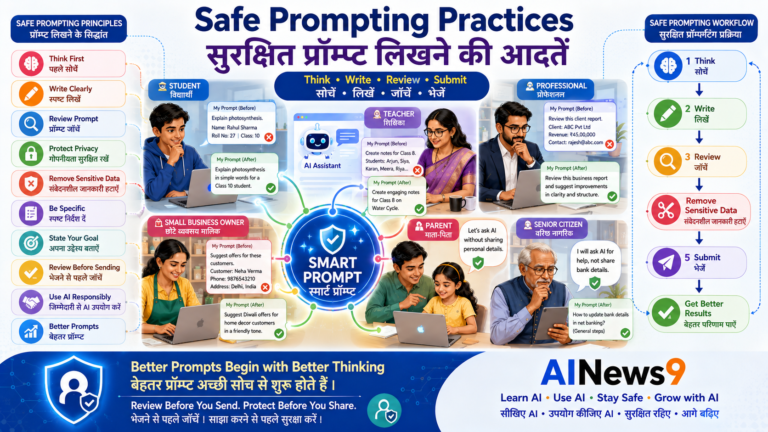
Never enter confidential or sensitive information into public AI tools.
Avoid sharing:
- Passwords
- Banking information
- Personal identity documents
- Confidential company data
- Medical records
Protecting your privacy is an important part of responsible AI use.
AI Cannot Replace Human Judgment
Generative AI is excellent at generating ideas and drafts.
However, final decisions should always be made by people, especially in areas such as:
- Healthcare
- Finance
- Law
- Education
- Government
Human oversight remains essential.
📌 Good Practice
Use AI to:
- Learn
- Explore ideas
- Improve productivity
Not to:
- Spread misinformation
- Cheat in exams
- Replace critical thinking
- Make important decisions without verification
❌ Common Myths About Generative AI
Generative AI is often misunderstood.
Let’s separate myth from reality.
| Myth | Reality |
|---|---|
| Generative AI copies everything from the internet. | It generates new content based on learned patterns rather than copying specific sources. |
| AI is always correct. | AI can make mistakes and should always be verified. |
| AI will replace every job. | AI is changing work and creating new opportunities alongside automation. |
| Only programmers can use Generative AI. | Anyone can benefit from Generative AI without coding knowledge. |
| Using AI means you are not creative. | AI supports creativity by helping people explore ideas faster. |
Understanding these myths helps people use AI with confidence and realistic expectations.
🛡 Responsible Use of Generative AI
As Generative AI becomes more common, responsible use becomes increasingly important.
Follow these simple guidelines.
✅ Verify Information
Always cross-check important facts using trusted sources.
✅ Protect Personal Information
Never share confidential or sensitive information with public AI systems.
✅ Be Transparent
If AI helps create content for work or education, follow your organization’s policies and be transparent when appropriate.
✅ Respect Copyright
Use AI-generated content responsibly and avoid violating copyright or intellectual property rights.
✅ Keep Learning
Generative AI is evolving rapidly.
The best way to benefit from it is to continue learning and developing your AI literacy.
🌟 Lesson Summary
Generative AI is changing how people create, communicate, learn, and work.
When combined with human creativity, ethics, and critical thinking, it becomes a powerful tool for improving productivity and solving problems.
The goal is not to let AI think for us.
The goal is to use AI wisely so that people can achieve more than ever before.
🎯 Key Takeaways
Congratulations! You have completed Lesson 2 of the AINews9 Learn AI Series.
Before moving to the next lesson, remember these important points:
- Generative AI is a specialized branch of Artificial Intelligence that creates new content.
- Unlike traditional AI, Generative AI can generate text, images, videos, music, presentations, and computer code.
- Popular tools such as ChatGPT, Microsoft Copilot, Google Gemini, Claude, and Canva AI use Generative AI.
- Generative AI helps improve productivity, creativity, and learning—but it does not replace human judgment.
- AI-generated content should always be reviewed and verified before being used for important decisions.
- Responsible use of Generative AI includes protecting personal information, respecting copyright, and thinking critically.
❓ Frequently Asked Questions (FAQs)
What is Generative AI in simple words?
Generative AI is a type of Artificial Intelligence that creates new content such as text, images, videos, music, computer code, and presentations based on the instructions provided by users.
Is Generative AI different from Artificial Intelligence?
Yes.
Artificial Intelligence (AI) is the broader field of creating intelligent computer systems.
Generative AI is one branch of AI that focuses specifically on generating new content.
Is ChatGPT Generative AI?
Yes.
ChatGPT is one of the most popular Generative AI applications. It uses Large Language Models (LLMs) to understand prompts and generate human-like responses.
Can Generative AI create images?
Yes.
Modern Generative AI tools can create:
- Images
- Illustrations
- Logos
- Videos
- Music
- Presentations
- Computer code
- Written content
The quality depends on the prompt and the AI model being used.
Can students use Generative AI?
Yes.
Students can use Generative AI to:
- Learn difficult concepts
- Summarize lessons
- Improve writing
- Practice interview questions
- Generate study notes
However, students should use AI to support learning—not to complete assignments dishonestly.
Is Generative AI always accurate?
No.
Generative AI can sometimes generate incorrect or outdated information.
Important facts should always be verified using reliable sources.
Will Generative AI replace human creativity?
No.
Generative AI can generate ideas and first drafts, but human creativity, experience, ethics, and judgment remain essential.
The best results come from collaboration between humans and AI.
🎓 Your AI Learning Journey
You’ve completed Lesson 2 of the AINews9 Learn AI Series.
Continue your journey with the next lessons:
| Status | Lesson | Topic |
|---|---|---|
| ✅ Completed | Lesson 1 | What is Artificial Intelligence? |
| ✅ Completed | Lesson 2 | What is Generative AI? |
| ⬜ Next | Lesson 3 | What is Machine Learning? |
| ⬜ | Lesson 4 | What are Large Language Models (LLMs)? |
| ⬜ | Lesson 5 | What is ChatGPT? |
| ⬜ | Lesson 6 | Prompt Engineering for Beginners |
| ⬜ | Lesson 7 | What are AI Agents? |
Each lesson builds on the previous one, helping you develop practical AI knowledge step by step.
🌟 Final Thoughts
Generative AI is one of the fastest-growing technologies of our time.
It is transforming education, workplaces, businesses, software development, design, and everyday productivity.
The real value of Generative AI is not that it replaces people.
Its greatest value is that it helps people work smarter, learn faster, and create more efficiently.
As AI continues to evolve, one skill will become increasingly important:
Knowing how to ask the right questions and use AI responsibly.
The more you understand Generative AI, the better prepared you’ll be for the future of learning, work, and innovation.
Remember:
Generative AI is most powerful when human creativity and AI capabilities work together.
📚 Recommended Resources
- Learn more about Generative AI from the OECD.
- Explore UNESCO’s guidance on using Generative AI in education.
- Read the NIST framework for trustworthy and responsible Generative AI.
- Try ChatGPT to experience Generative AI firsthand.
🏢 About AINews9
AINews9 is India’s AI Literacy Platform.
Our mission is simple:
Making AI Simple, Useful & Safe for Every Indian.
We help:
- 🎓 Students
- 👩🏫 Teachers
- 👨👩👧 Parents
- 💼 Professionals
- 👴 Senior Citizens
- 🏪 Small Businesses
Through four learning pillars:
- 📘 Learn AI
- 🛠 Use AI
- 🛡 Stay Safe
- 📈 Grow with AI
Whether you’re taking your first step into Artificial Intelligence or learning how to use advanced AI tools, AINews9 is here to guide you with trusted, practical, and easy-to-understand content.
Thank you for completing Lesson 2.
➡️ Continue with Lesson 3: What is Machine Learning?